Sufiya Sufi: The Indian Ultra-Runner Who Ran from Kashmir to Kanyakumari.
 Sufiya Sufi: The Indian Ultra-Runner Who Ran from Kashmir to Kanyakumari

India is a land of extraordinary geographical diversity. From the snow-covered mountains of Kashmir in the north to the tropical coastline of Kanyakumari in the south, the country stretches across thousands of kilometres and encompasses some of the world's most varied landscapes.
Travelling across this vast distance is a remarkable achievement, but running the entire length of the country is something entirely different.
Indian ultra-runner Sufiya Sufi, also known as Sufiya Khan, turned this seemingly impossible challenge into reality. In 2019, she ran from Kashmir to Kanyakumari, covering approximately 4,000 kilometres in 87 days, 2 hours and 17 minutes.
Her achievement was recognised by Guinness World Records as the fastest journey from Kashmir to Kanyakumari on foot by a female runner. However, her achievement was about more than a sporting record. Sufiya undertook the journey with a broader message of hope, humanity, unity, peace and equality.
Who Is Sufiya Sufi?
Sufiya Sufi, also referred to in various reports as Sufiya Khan, is an ultra-runner from Ajmer, Rajasthan. Born in 1987, she did not begin her journey as a professional athlete. Her transition into long-distance running came relatively late compared with many elite athletes.
Before committing herself fully to running, Sufiya worked in the aviation industry. She spent around a decade as ground staff at Delhi's airport. Her job was demanding and stressful, and running initially became a way for her to relax, stay fit and cope with everyday pressures.
Gradually, what began as a fitness activity developed into a passion. She started participating in marathons and became increasingly interested in long-distance running. Eventually, she made a life-changing decision to leave her job and pursue running seriously.
This decision was particularly significant because Sufiya did not come from a traditional sporting background or an established professional athletic career. She faced financial and logistical challenges while planning her ambitious running expeditions, but remained determined to move forward.
Note: Sufiya Sufi, also known as Sufiya Khan, is an Indian ultra-runner from Ajmer, Rajasthan. She gained international recognition after completing the Kashmir-to-Kanyakumari journey in 2019.
The Beginning of Her Running Journey
Sufiya's transition from recreational runner to ultra-runner was gradual. Her early experiences with long-distance running convinced her that she possessed the physical and mental endurance necessary for much greater challenges.
One of her significant early achievements occurred in 2018 when she completed the Great Indian Golden Triangle Run. The route, connecting Delhi, Agra and Jaipur, spans approximately 720 kilometres. According to reports, she completed the journey in just 16 days, becoming the first female runner to accomplish the feat within that period.
This experience transformed her perception of what was possible. Instead of viewing long-distance running solely as a race, she began to see it as a form of exploration and personal transformation.
Her life partner, Vikas, who is a cyclist, also encouraged her long-distance ambitions. After completing his own cycling journey from Kashmir to Kanyakumari, the idea of Sufiya running across the country began to take shape.
The Kashmir-to-Kanyakumari Challenge
The idea of running from Kashmir to Kanyakumari was enormous. India is geographically vast, and the journey would expose a runner to radically different environments. The route would involve mountains, plains, cities, highways, villages and coastal regions.
Sufiya began her historic run from Kashmir on 25 April 2019. Her original objective was to complete the approximately 4,000-kilometre journey within 100 days. Instead, she completed it considerably faster.
On 21 July 2019, she reached Kanyakumari, India's southernmost mainland point, after completing the journey in 87 days, 2 hours and 17 minutes.
Guinness World Records officially lists Sufiya Khan as the female record holder for the fastest journey from Kashmir to Kanyakumari by foot.
The achievement meant that she had maintained an extraordinary level of endurance for almost three months. It was not a conventional marathon in which an athlete runs a single race and then rests. Her challenge required her to repeatedly run long distances, recover and continue the next day.
Running for a Message
What made Sufiya's journey particularly meaningful was that she did not want the run to be only about a world record.
She called the initiative a run for HOPE — Humanity, Oneness, Peace and Equality. During the journey, she wanted to communicate the idea that people from different regions, cultures and communities could be connected by common human values.
In interviews during the expedition, she explained that her message was particularly important because she felt that too much hatred was being spread through social media. Her run therefore became an attempt to communicate a positive alternative: that India's diversity could be celebrated rather than treated as a source of division.
The significance of this message was amplified by the route itself. As she travelled through different parts of India, she interacted with people from different backgrounds and experienced the country's extraordinary cultural diversity.
Her journey demonstrated that an endurance expedition can become more than a sporting event. It can also become a platform for communication, interaction and sharing positive ideas.
The Physical Challenges
Running thousands of kilometres is far more demanding than completing a conventional marathon. The human body needs to recover from repeated muscular stress, joint impact, dehydration, fatigue and sleep deprivation.
Sufiya had to deal with many of these difficulties during her Kashmir-to-Kanyakumari expedition. Reports and interviews about her journey describe challenges including injuries, exhaustion, traffic, pollution, construction zones, heat and humidity.
One account of her journey also describes a serious health setback involving a collapsed lung that resulted in hospitalisation for several days. Such an episode demonstrates the extraordinary physical risks involved in attempting an endurance expedition of this scale.
Another major challenge was India's changing climate. Starting in the northern part of the country meant beginning in a comparatively cooler environment and eventually moving towards the heat and humidity of southern India.
She also had to contend with changes in elevation. Mountainous terrain demands a different kind of physical effort from long, relatively flat highway sections. The ability to adapt to changing terrain was therefore essential.
How Do You Run Such a Long Distance?
One of the most fascinating aspects of Sufiya's story is that the achievement was not based simply on running continuously. Long-distance expeditions require careful management of energy and recovery.
In an interview describing her running strategy, Sufiya explained that she sometimes divided a day's distance into sections. During extremely hot conditions, she could run part of the distance, rest during the afternoon and then continue later.
She later modified her approach to start earlier and complete more of the day's distance in one stretch, allowing greater recovery time afterwards.
This illustrates an important lesson in endurance sports: success is not always about running faster. It is about managing the body intelligently over a long period.
Training, nutrition, hydration, sleep, stretching, injury management and mental strength all become equally important.
The Mental Battle
Perhaps the biggest challenge in an ultra-distance expedition is psychological.
When a person runs for one hour, the mind can concentrate on the finish line. When the journey lasts almost three months, the finish line can seem impossibly distant.
Sufiya had to overcome tiredness repeatedly. Every morning meant beginning another demanding day. A difficult section of road could not simply be abandoned because there were still thousands of kilometres ahead.
She has spoken about running as something similar to meditation. The repetitive movement can create a state in which the runner becomes deeply focused on the present moment. For an ultra-runner, this mental discipline can be crucial.
Her approach demonstrates the importance of dividing an enormous objective into smaller achievable targets. Instead of thinking continuously about the entire Kashmir-to-Kanyakumari distance, a runner can concentrate on the next kilometre, the next checkpoint or the next day's target.
Financial and Logistical Challenges
Another less visible part of Sufiya's story was the financial challenge.
A journey of several thousand kilometres requires much more than physical fitness. Accommodation, food, transportation of essential supplies, medical support, communication, equipment and route planning all involve considerable expense.
According to interviews about her journey, she faced difficulty finding sponsorship and turned to crowdfunding to help finance the expedition.
This makes her achievement particularly notable. She was not an athlete backed by a large professional sports organisation with unlimited resources. She had to build the expedition around limited means while simultaneously preparing her body for an extreme physical challenge.
The Role of Ordinary People
One of the most inspiring elements of Sufiya's journey was the support she received from ordinary people along the route.
A long-distance runner travelling across India inevitably encounters thousands of people. Some may provide food, encouragement or practical assistance; others may simply stop to speak with the runner.
Such encounters can become a source of psychological strength. When physical exhaustion becomes overwhelming, a kind word from a stranger can provide the motivation needed to continue.
Sufiya's journey therefore became a shared experience. Although she was the person physically running the route, many people became part of the story by supporting her along the way.
Women and Ultra-Running
Sufiya's achievement also has important significance for women in endurance sports.
Long-distance running is physically demanding for anyone, but women attempting solo endurance expeditions may face additional social and logistical concerns. Travelling and running for thousands of kilometres requires confidence, preparation and a strong support network.
Sufiya has spoken about running as a woman in India and about the support she received from people during her expeditions.
Her story demonstrates that athletic achievement does not have to begin during childhood. A person can discover a passion later in life, develop the necessary skills and still reach an extraordinary level.
Life After Kashmir to Kanyakumari
The Kashmir-to-Kanyakumari record was not the end of Sufiya's ultra-running journey. Instead, it became a foundation for even more ambitious challenges.
In 2021, she completed a run around India's Golden Quadrilateral, covering approximately 6,002 kilometres in 110 days, 23 hours and 24 minutes. Guinness World Records lists this as the fastest time for a female to complete the Golden Quadrilateral on foot.
She also completed the demanding Manali-to-Leh route. Guinness records her as the fastest female to cover the approximately 485-kilometre distance, completing it in 6 days, 12 hours and 6 minutes.
These achievements show a clear progression in her career. Each expedition became a stepping stone towards a more difficult challenge.
A New Chapter in 2026
Sufiya has continued to challenge herself. In 2026, she undertook another major India-wide expedition, this time running from Kanyakumari towards Kashmir as part of her larger “Run for Dreams” campaign.
According to recent reporting, she completed approximately 4,167 kilometres from Kanyakumari to Srinagar in 68 days and 23 hours, reaching Srinagar on 20 July 2026. The expedition is part of a larger 5,000-kilometre objective that aims to continue towards the Karakoram region.
This later expedition is significant because it demonstrates that Sufiya's earlier record was not an isolated achievement. Years after her first Kashmir-to-Kanyakumari run, she continued to push her physical and mental boundaries.
What Makes Sufiya Sufi's Story Special?
- She started relatively late: She did not grow up as a professional athlete and discovered serious running only as an adult.
- She changed careers: She left a stable job in the aviation industry to pursue her passion for running.
- She embraced ultra-running: Instead of limiting herself to conventional races, she chose extremely long endurance expeditions.
- She ran with a purpose: Her Kashmir-to-Kanyakumari journey carried a message of Humanity, Oneness, Peace and Equality.
- She overcame financial obstacles: Her expeditions required her to find support and funding while building her running career.
- She continued after success: The Kashmir-to-Kanyakumari record became one milestone in a much larger endurance career.
Lessons from Sufiya Sufi's Journey
1. It Is Never Too Late to Begin
People often believe that major achievements are reserved for those who start young. Sufiya's journey challenges that assumption. She developed her running career as an adult and eventually became a record-holding ultra-runner.
2. Passion Can Transform a Life
Running began as a way for Sufiya to manage stress. Gradually, it became her passion and then her profession. This illustrates how an ordinary activity can transform someone's life when pursued with dedication.
3. Large Goals Require Patience
Four thousand kilometres cannot be completed in a single day. The achievement required thousands of individual steps. The same principle applies to almost every major goal in life.
4. Physical Strength Is Only Part of Endurance
Long-distance running requires mental resilience. Pain, fatigue, uncertainty and setbacks have to be managed alongside physical exertion.
5. A Personal Achievement Can Carry a Social Message
Sufiya did not want her run to be remembered only as a record. By associating it with HOPE — Humanity, Oneness, Peace and Equality, she gave the physical journey a broader purpose.
Conclusion
Sufiya Sufi's journey from an aviation professional to a record-breaking Indian ultra-runner is a remarkable example of determination, courage and self-belief.
Her 2019 run from Kashmir to Kanyakumari transformed an enormous geographical distance into a personal journey of endurance. Covering roughly 4,000 kilometres in 87 days, 2 hours and 17 minutes, she established the Guinness World Records mark for the fastest female journey from Kashmir to Kanyakumari by foot.
But the numbers tell only part of the story. Behind the record were months of preparation, physical pain, injuries, financial difficulties, changing weather, traffic, exhaustion and countless moments when continuing must have required tremendous mental strength.
Most importantly, Sufiya's run carried a message. She wanted her journey to stand for hope, humanity, oneness, peace and equality. Her footsteps crossed not only India's geographical length but also countless communities, cultures and landscapes.
Her later achievements, including the Golden Quadrilateral and Manali-to-Leh runs, show that the Kashmir-to-Kanyakumari achievement was not the destination of her journey but the beginning of an extraordinary chapter in Indian ultra-running.
Sufiya Sufi's story ultimately reminds us that extraordinary achievements often begin with an ordinary decision: to take the first step.
Key Facts About Sufiya Sufi
| Name | Sufiya Sufi, also reported as Sufiya Khan |
|---|---|
| Birthplace | Ajmer, Rajasthan, India |
| Born | 1987 |
| Profession | Ultra-runner |
| Earlier Career | Aviation/airport ground staff |
| Kashmir-to-Kanyakumari Run | 2019 |
| Approximate Distance | 4,000 kilometres |
| Official Record Time | 87 days, 2 hours and 17 minutes |
| Record | Fastest journey from Kashmir to Kanyakumari by foot by a female |
| Message | HOPE — Humanity, Oneness, Peace and Equality |
| Other Major Achievements | Great Indian Golden Triangle, Golden Quadrilateral and Manali-to-Leh endurance runs |
Final Thought
When most people look at a map of India, they see distance. Sufiya Sufi saw a challenge. She converted that distance into thousands of kilometres, millions of footsteps and one unforgettable message: limits are often defined not by the road ahead, but by the courage to begin.
Her story is therefore not only the story of a runner. It is the story of a woman who changed the direction of her life, accepted uncertainty, endured hardship and used her passion to inspire others.
From Kashmir to Kanyakumari, every step became part of a larger journey — a journey of endurance, hope and belief in the human spirit.
Video
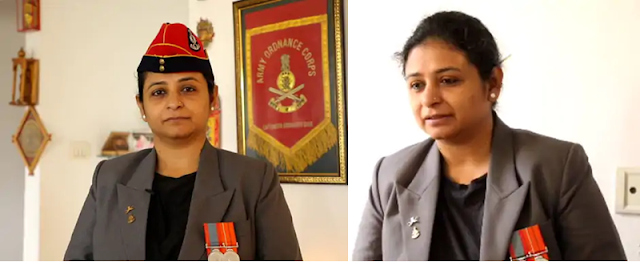
Runner Sufiya Sufi : भारत की बेटी सुफ़िया सूफ़ी ने रचा इतिहास, 110 Marathon में World Record



Comments